






Pigmentation pathways, hormonal influences, treatment risks, and the clinical considerations that can make a difference in your treatment room.
By Nichelle Foster Mosley, LE
Two clients arrive with similar skin tones. Both struggle with hyperpigmentation. Both want brighter, clearer, more even-looking skin.
Would you recommend the same treatment?
Not necessarily.
Understanding global majority skin requires looking beyond visible complexion. Melanosome distribution, inflammatory responses, hormonal influences, skin barrier function, and individual treatment histories can all affect how skin responds to professional care.
For Estheticians, the message is especially relevant: skin tone is an important part of your assessment, but it is never the entire assessment.
1. Melanin Is Only Part of the Picture
Global majority skin encompasses extraordinary biological diversity. Although melanin contributes to visible skin color and offers some natural photoprotection, understanding the skin requires a closer look at how pigmentation develops and responds to external influences.
One important distinction involves melanosomes.
Melanosomes are specialized structures within melanocytes where melanin is produced and stored before being transferred to surrounding skin cells.
Their size, distribution, and arrangement can vary among individuals and populations. These differences contribute to skin pigmentation and influence the appearance of certain pigmentary conditions.
But pigmentation is only one consideration.
Estheticians must also evaluate inflammation, barrier integrity, medical history, previous treatments, and the client’s individual response to skincare.
NBEW Pro: The Clinical Takeaway
Never assume two clients with similar complexions have identical skincare needs.
During consultations, consider:
- Does the client develop lingering dark marks after acne, irritation, or injury?
- Has the client experienced adverse reactions to exfoliants or previous professional treatments?
- Are there signs of dryness, sensitivity, or compromised barrier function?
- Are pigment changes associated with pregnancy, hormonal changes, or other health considerations?
- What products and active ingredients is the client currently using?
These questions can reveal more about treatment suitability than complexion alone.
2. Inflammation Can Leave a Lasting Impression
For many clients with global majority skin, post-inflammatory hyperpigmentation (PIH) is a significant concern.
PIH develops when inflammation or injury triggers increased pigment production or redistribution, resulting in discoloration that can persist long after the original problem resolves.
Common triggers include:
- Acne and inflammatory breakouts
- Aggressive exfoliation
- Skin irritation
- Burns or other injuries
- Certain professional treatments
Although PIH can affect every skin tone, it may be more noticeable and persistent in darker complexions.
What This Means in the Treatment Room
The goal is not simply to remove visible discoloration. It is also to minimize the inflammatory triggers that can contribute to additional pigmentation.
Before performing a treatment, consider whether the client’s skin is sufficiently stable and whether the anticipated benefits justify the risk of irritation.
Professional principle: Treat the source of inflammation while supporting skin recovery.
3. Hormones and Hyperpigmentation: Look Beneath the Surface
Hormonal influences play an important role in several skin conditions.
Melasma
Melasma is a pigmentary disorder associated with a combination of factors, including ultraviolet exposure, visible light, genetics, and hormonal influences.
Pregnancy and certain hormonal medications may contribute to its development.
Because melasma can be persistent and recurrent, treatment requires realistic expectations, appropriate sun protection, and careful selection of professional interventions.
Acanthosis Nigricans
Acanthosis nigricans commonly presents as darker, thickened, velvety skin, often in body folds.
It may be associated with insulin resistance and other medical conditions.
Estheticians should recognize its appearance and understand when referral to a healthcare professional is appropriate.
Hormonal Acne and PIH
Inflammatory acne may result in lingering hyperpigmentation, creating two concerns that sometimes need to be managed simultaneously.
Aggressive treatment of discoloration without addressing active inflammation can undermine progress.
NBEW Pro: The Clinical Takeaway
Not every darkened area is ordinary hyperpigmentation.
Recognizing patterns, asking appropriate questions, and referring clients when necessary are important parts of responsible Esthetics practice.
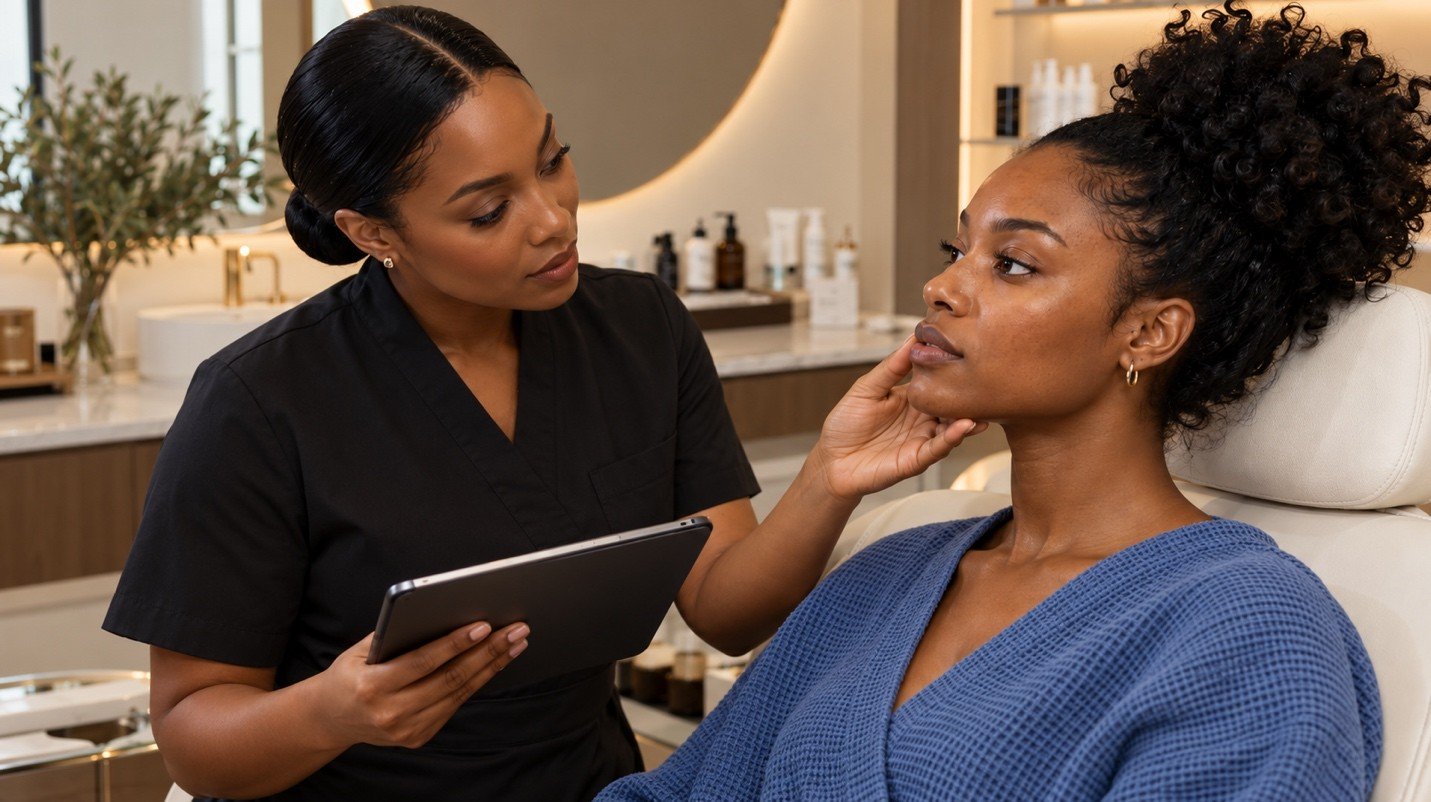
Individualized skin assessments help Estheticians identify concerns, evaluate treatment suitability, and develop more thoughtful approaches to caring for global majority skin.
4. Treatment Ingredients: What Deserves Your Attention?
Several ingredients and treatment approaches deserve particular attention when managing pigmentation concerns in global majority skin.
Here are the important considerations for professional practice.
Polyhydroxy Acids (PHAs)
PHAs are often discussed as potentially gentler exfoliating alternatives to some alpha hydroxy acids.
Their humectant properties may make them useful in formulations designed for clients concerned about dryness or sensitivity.
Consider: Concentration, formulation, frequency, skin condition, and tolerance all influence suitability.
Tranexamic Acid
Tranexamic acid has been studied for melasma management, including topical and oral applications.
Results vary according to formulation, treatment method, and patient characteristics.
Consider: Topical use may be relevant within appropriate skincare protocols. Oral tranexamic acid requires medical assessment and prescribing because of potential systemic risks.
Cysteamine
Cysteamine is another ingredient studied for hyperpigmentation and melasma.
It may offer benefits for certain patients, although irritation and product tolerability remain important considerations.
Consider: Follow formulation-specific instructions and recognize when medical management is appropriate.
Glutathione
Glutathione has attracted attention for its potential effects on pigmentation.
However, the available evidence remains insufficient to support broad recommendations for skin lightening, especially given concerns surrounding some administration methods.
Consider: Distinguish preliminary research from established treatment recommendations.
Iron Oxide Sunscreens
Visible light can contribute to pigmentation concerns, particularly in people prone to melasma and PIH.
Tinted broad-spectrum sunscreens containing iron oxides may provide additional protection against visible light compared with products that offer UV protection alone.
Consider: Discuss consistent photoprotection as part of a pigmentation-management plan.
5. Chemical Peels and Lasers: Precision Matters
Chemical peels and energy-based treatments can be useful for selected pigmentary concerns, but the potential for inflammation and subsequent pigmentation changes warrants careful assessment.
Appropriate treatment depends on the client’s condition, medical history, treatment parameters, practitioner training, and scope of practice.
Higher treatment intensity does not automatically produce better outcomes.
For Estheticians, sound preparation, recognition of contraindications, realistic client education, and appropriate referral can be just as important as the treatment itself.
NBEW Pro: Before You Treat
Use these questions as part of your clinical decision-making process:
- What is the likely cause of the pigmentation?
- Is active inflammation present?
- Does the client’s history suggest an increased risk of PIH?
- Is the skin barrier compromised?
- What is the client’s current skincare regimen?
- Are there medications, medical conditions, or recent procedures that affect treatment suitability?
- Does the proposed procedure fall within my training, licensure, and scope of practice?
- Would collaboration with or referral to a dermatologist improve the client’s care?
The answers should help guide whether to proceed, modify the approach, postpone treatment, or refer.
6. Better Assessments Begin With Better Questions
Traditional assessment tools do not always capture the full range of pigmentation severity in global majority skin.
Conventional melasma assessment tools have limitations, particularly when evaluating darker skin tones. More inclusive evaluation methods are essential to accurately assessing pigmentation concerns across global majority skin.
For practicing Estheticians, consistent documentation can help make treatment decisions more informed.
Consider recording:
- Pigmentation distribution and appearance
- Relevant triggers and previous treatment responses
- Baseline photographs taken under consistent lighting
- Skin tolerance and reported irritation
- Home-care adherence
- Changes in skin condition over time
Accurate documentation helps practitioners assess progress, identify concerns, and communicate more effectively with clients and collaborating healthcare professionals.
7. The Standard Is Individualized Care
Global majority skin is not a single skin type, a single biological response, or a universal treatment protocol.
It represents people with diverse complexions, histories, conditions, and skincare needs.
For Estheticians, understanding that diversity means moving beyond assumptions and strengthening the connection between skin science and everyday practice.
It means recognizing when to treat, when to adjust, when to educate, and when to refer.
And it means giving every client the benefit of a thorough assessment rather than relying solely on what is visible at first glance.
The NBEW Pro takeaway: Know the skin in front of you. Let the science inform your decisions, and let the individual guide your care.
Originally published in CIDESCO LINK, Issue 98, pages 11–14. Adapted for NBEW Pro, subject to author review and permission.
Professional education only. Treatment decisions must follow applicable scope-of-practice requirements, clinical guidelines, and individual client needs.